
Rule of thumb: if your garage door feels stuck or sluggish on a cool morning, it's almost always moisture or rust, not actual ice. Margate doesn't get hard freezes, but the combination of overnight humidity, cooler November-through-February temperatures, and salt-laden air near the coast can mimic the symptoms homeowners up north blame on frozen tracks. The exceptions are rare cold snaps when temps dip into the 40s overnight — just enough to stiffen lubricant and tighten metal-to-metal tolerances, even without frost.
Symptoms to Watch For
- The door won't budge at first, then releases with a pop. This points to the bottom seal sticking to a damp concrete slab, not the track.
- The door moves, but slowly, with visible strain on the opener. That's usually resistance somewhere in the roller-and-track system.
- The opener motor hums or clicks but the door barely lifts. This suggests either a force-setting problem or the springs aren't doing their share of the lifting work.
- Grinding, squealing, or a scraping sound along the tracks. That's a rust or debris issue, common after a humid summer.
What a Technician Checks, in Order
1. The Bottom Seal and Slab
This is the first thing worth ruling out because it's the cheapest fix. Vinyl weatherstripping can pick up condensation overnight and essentially suction itself to a cool concrete floor, especially after an afternoon downpour left the slab damp. The fix is simple: clean the seal, let both surfaces dry fully, and apply a thin bead of silicone-based (not petroleum-based) lubricant along the contact edge so it stops adhering. If the seal is cracked, brittle, or no longer sitting flat, a replacement strip solves the problem for good — these are inexpensive and worth swapping out annually in a coastal climate.
2. Rollers and Tracks
Next, a technician checks whether the rollers are turning freely or grinding against rust. Salt air accelerates corrosion on steel rollers and track edges, even a few miles inland from the coast, and summer humidity leaves a film of moisture that invites rust to form over the cooler months. The fix: clean the tracks with a degreaser, check for pitting or bent sections, and relubricate rollers and hinges with a garage-door-specific lithium or silicone spray — never WD-40 as a long-term lubricant, since it attracts dust and dries out fast in this climate. Nylon rollers with sealed bearings hold up better here than steel and are a common upgrade during a tune-up.
3. Spring Tension
Torsion and extension springs are steel, and steel contracts slightly as temperatures drop. On a cooler morning the springs may be carrying marginally less lift than they do in August heat, which is enough to make a marginal spring feel noticeably weaker. A technician checks the door's balance by disconnecting the opener and lifting manually — it should stay roughly level at waist height. If it drops or shoots up, the spring tension needs adjustment or the spring itself has reached the end of its cycle life. This is not a DIY adjustment; torsion springs are under heavy load and require proper bars and training.
4. Opener Force Settings and Limit Switches
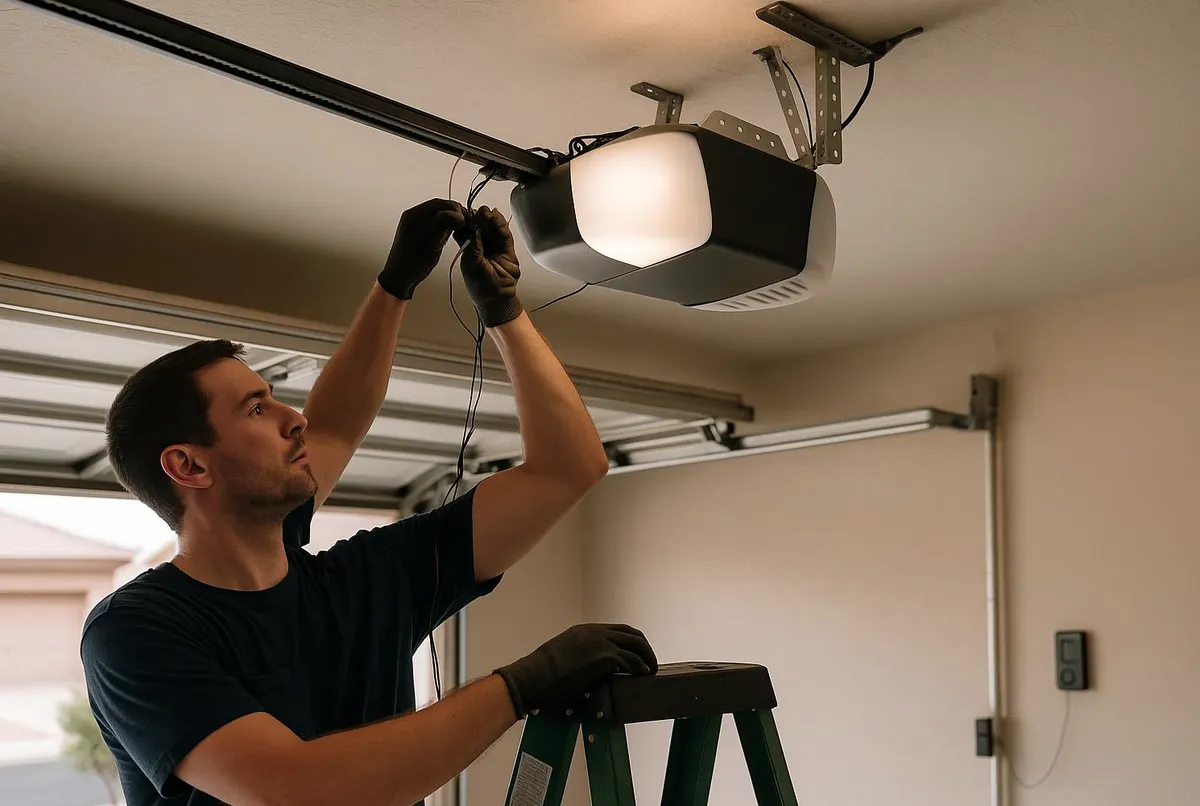
If the seal is clear, the tracks are clean, and the springs are balanced, the next stop is the opener itself. Force and travel-limit settings can drift over time, and a door that's working slightly harder due to rust or stiff rollers may start tripping the opener's safety reversal. Resetting the force to match the door's true resistance — after the mechanical issues above are fixed, not instead of fixing them — restores smooth operation. Masking an opener problem by cranking up the force is a common mistake that just stresses the motor and the door's hardware.
5. Chain or Belt Tension
Last on the list because it's the least common culprit: a loose chain or belt can make the door feel sluggish or cause it to lag behind the opener's trolley. A quick tension adjustment, following the manufacturer's spec, usually resolves it.
When to Call Margate Garage Door Repair
If your door sticks most mornings, drags audibly along the tracks, or the opener seems to be working overtime, it's worth having a technician look before a small issue turns into a stuck door at the worst possible moment — say, right before you need to leave for work. Our Garage Door Maintenance & Tune-Up service covers exactly this: cleaning and lubricating the roller and track system, checking seal condition, and verifying spring balance. If we find a spring that's lost tension or is showing fatigue, our Garage Door Spring Repair service handles that safely with the right tools.
If your garage door in Margate, FL is sticking, dragging, or straining on cool mornings, give us a call for same-day service — we'll track down the real cause and get it moving smoothly again before the next cold snap or the next downpour.